
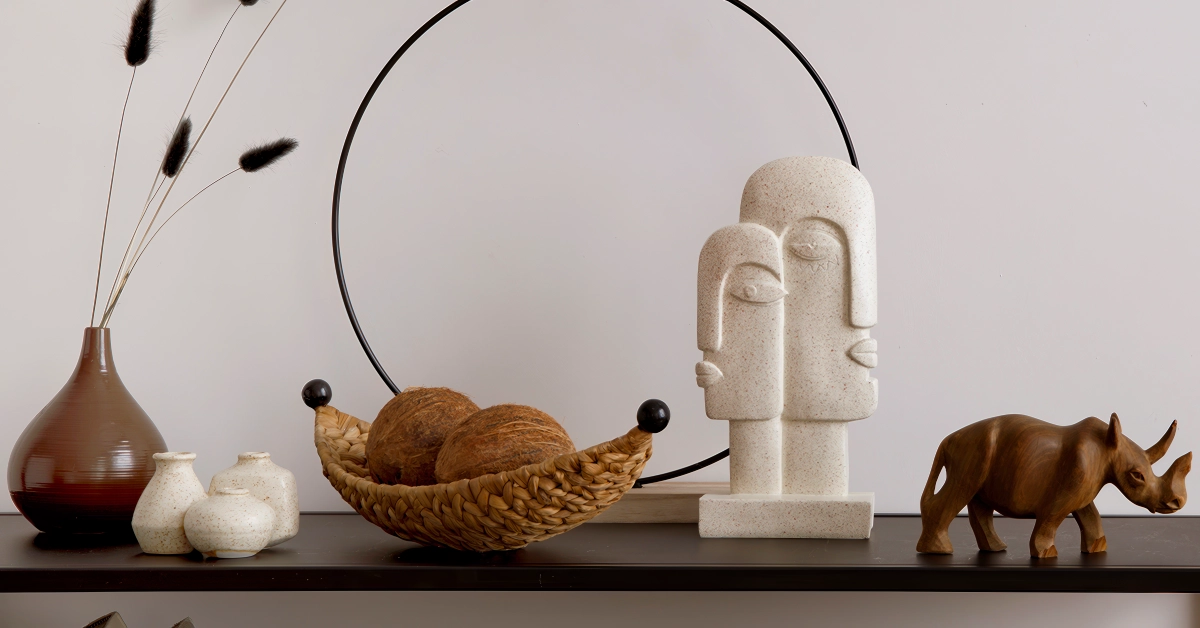
Why Scale and Proportion Matter: The Secret to Beautiful Decorative Styling
Simply choosing attractive decorative items doesn’t make a beautifully decorated room. An equally important role is played by how these pieces relate to one another and with the space that surrounds it. Two fundamental design principles that help in creating balanced, inviting, and visually pleasing interiors are scale and proportion. A highly extravagant and refined decorative accessory may feel misplaced if they are too large, too small, or arranged without considering the size of the room and the furniture around them.
When you understand how to use scale and proportion, you can style your home with confidence. This also ensures that all the decorative items are contributing to an overall harmonious look. From decorating a cozy apartment to a spacious family home, you can create displays that feel intentional and not cluttered with these principles.
In this guide, we explore how scale and proportion influence decorative styling and share practical tips for creating balanced, elegant interiors.
Understanding Scale and Proportion
Scale and proportion are often mentioned together, but in interior styling, they tend to have different meanings. The size of a decorative item relative to the room or furniture around it is known as the scale of the room. For instance, a tiny vase on a large dining table may look insignificant, whereas, if you place an oversized sculpture in a compact hallway, it can feel overwhelming.
The manner in which decorative items relate to one another within a display is referred to as the proportion. Pieces that work together naturally generally make up a well-proportioned arrangement. They create a sense of visual balance. Considering both principles simultaneously can make your decorative display appear more polished and cohesive.
Consider the Size of Your Room
Evaluate the dimensions of your space, before you select any decorative items. Bold statement pieces are beneficial for larger rooms, as they fill the available space, without feeling lost. You can use tall floor vases, oversized artworks, or substantial decorative sculptures to anchor expansive areas.
On the other hand, smaller rooms look better with thoughtfully chosen accessories. Such accessories complement the available space and don’t dominate it. You can maintain an open and comfortable atmosphere by selecting an appropriately sized decor.
Match Decorative Items to Furniture
When choosing decorative accessories, your furniture provides a useful guide. For instance:
- A large dining table pairs well with a generous centerpiece.
- A narrow console table suits slimmer decorative objects.
- A wide bookshelf can accommodate larger sculptures alongside smaller accents.
- A compact bedside table benefits from modest decorative accessories.
Keeping decorative items in proportion to the furniture prevents displays from looking awkward or disconnected.
Create Visual Balance with Height
Objects that are all of same height rarely make up a successful display. Instead, a combination of tall, medium, and shorter decorative pieces can help in guiding the eye naturally across the arrangement.
Let’s take an example of a console table here. You can style it with the following:
- A tall ceramic vase
- A medium-sized framed photograph
- A smaller decorative bowl
You can create depth with this layered approach. Besides, it tends to make your display even more engaging as well.
Use Statement Pieces Wisely
One or two focal points can be beneficial for every room. You should not fill every surface with decorative items, instead, focus on choosing one standout piece, which has the capacity of immediately capturing attention.
Some examples here include the following:
- An oversized mirror
- A large sculpture
- A dramatic vase
- A bold piece of wall art
The statement piece should be complemented by supporting accessories. They should not compete with it.
Group Decorative Items Thoughtfully
A stronger visual impact is created when you group decorative items. Scattering them throughout a room only creates clutter and dulls this impact altogether. You must look to arrange accessories in groups of three or five, varying the following elements:
- Height
- Shape
- Texture
- Material
With this, you can create displays that can feel curated, while maintaining a good proportion as well.
Leave Room for Empty Space
Filling every available space is one of the biggest decorative mistakes that people tend to commit. Your decorative items get space to breathe and stand out, when there’s negative space or empty space available.
This also helps in ensuring that your interior doesn’t feel overcrowded. Sometimes, when you remove one decorative item, it helps in improving your display more than adding another piece.
Mix Different Shapes and Sizes
Want to create interest while maintaining balance? The easiest way to do that is by combining a variety of sizes. This is one of the simplest things to do! For example, you can try the following pairings:
- A tall vase with a low bowl
- A round sculpture beside a rectangular frame
- Large books with smaller ornaments
With this contrast, you can keep your displays dynamic, while ensuring that no single item overwhelms the arrangement altogether.
Think Vertically
Focusing only on horizontal surfaces is a big mistake to commit here. You get an opportunity of introducing decorative elements with your walls. This helps in improving the overall proportion of your space.
Consider the following:
- Large framed artwork
- Floating shelves
- Decorative mirrors
- Wall sculptures
You can easily balance a room with high ceiling by utilizing the vertical spaces appropriately. Besides, you should look to add depth to smaller areas as well.
Scale Decorative Displays to Ceiling Height
Decorative styling is influenced by ceiling height of any room. Taller decorative pieces and vertically arranged displays can be easily accommodated in rooms with higher ceilings.
More compact arrangements must be used in lower ceiling spaces. Such spaces tend to benefit from the same, as it helps in keeping your room’s feel open. When you’re choosing decor that complements the height of your ceiling, it tends to contribute to a more harmonious interior.
Use Rugs and Lighting to Enhance Proportion
Accessories are not the only things that make up decorative styling in any space. It extends beyond simple accessories only. Your furniture tends to appear disconnected if you’re using a rug that is too small or overly short.
Moreover, if you’re using lighting that’s out of proportion tends to throw off the balance of an entire room. These are significant issues that need to be addressed appropriately.
Instead, always stick with the rugs that can help in anchoring your furniture comfortably. Besides, always stick with lighting fixtures that are well-suited with the size of the surrounding space altogether.
When they work together, such elements tend to support your decorative items and create a unified design. This has a significant visual impact and enhances the overall appeal of your space altogether as well.
Refresh Displays Without Losing Balance
Keeping scale and proportion in mind is crucial, especially if you’re updating your decor constantly throughout the year. This means that you cannot neglect scale and proportion, if you don’t want your room to look disoriented.
Your existing display must be well-complemented by seasonal decorations. Make sure its not overwhelming the latter. Instead of adding numerous small accessories, you must replace one or two items with seasonal alternatives that match the size and visual weight of the original pieces.
This approach keeps your home feeling fresh while preserving harmony.
Balance Bold Statement Pieces with Subtle Accents
A well styled display often combines one eye catching decorative item with several understated accessories. This approach creates a natural focal point without making the arrangement feel crowded or overwhelming. For example, a large decorative vase can be paired with a small stack of books, a candle, and a textured bowl to create a balanced composition.
The supporting pieces should vary in size while complementing the main item in color and material. This layered styling technique adds depth and visual interest, ensuring that each decorative element contributes to a cohesive display rather than competing for attention.
Step Back and Assess the Overall Look
Once your decorative display is complete, take a few steps back and view it from different angles within the room. This simple habit helps you identify whether any item appears too large, too small, or out of place. You may notice uneven spacing, an imbalance in height, or colors that draw too much attention.
Making small adjustments, such as repositioning a vase or removing an unnecessary accessory, can greatly improve the final result. Evaluating your décor from a distance ensures that scale and proportion work together to create a polished, harmonious, and inviting interior.
Final Thoughts
Scale and proportion are often the invisible elements that separate ordinary decorating from truly exceptional styling. By selecting decorative items that suit the size of your room, complement your furniture, and work harmoniously with one another, you can create interiors that feel balanced, elegant, and welcoming.
Whether you prefer contemporary, traditional, or eclectic décor, understanding these design principles helps every decorative display achieve its full potential. With thoughtful planning and thoughtful placement, your home can feel beautifully styled all year round, proving that great design is not about filling a space but about creating the right balance within it.